


Hello fellow creature lovers!
Welcome to a special Paws and Reflect nuance-letter, where I’m talking with my friend-mentor-author extraordinaire E.B. Bartels. She’s the voice behind Good Grief: On Loving Pets, Here and Hereafter, an “offbeat yet heartfelt”1 work of narrative nonfiction published by HarperCollins in 2022. (It came out in paperback this past fall!)
Having lived through the loss of several pets across species—perhaps most notably the behavioral euthanasia of her dog, Seymour, which she writes about beautifully for WBUR—and interviewed dozens of fellow animal lovers about their own experiences, E.B. is something of an expert on saying goodbye to our companions.
I am no such expert.
But I’ve been thinking about Scout’s decline more and more and more in recent months. (In scouring my post archive for those links I was a little shocked by how many center around anticipatory grief. Clearly this has been more top of mind than I even realized.) Last month I celebrated my birthday, which always makes me think about Scout—how her presence has dominated this decade of my life, how I hope so fervently she makes it to my 30s with me—so E.B. and I wanted to talk more about what it means to love and lose the creatures who make our worlds whole.
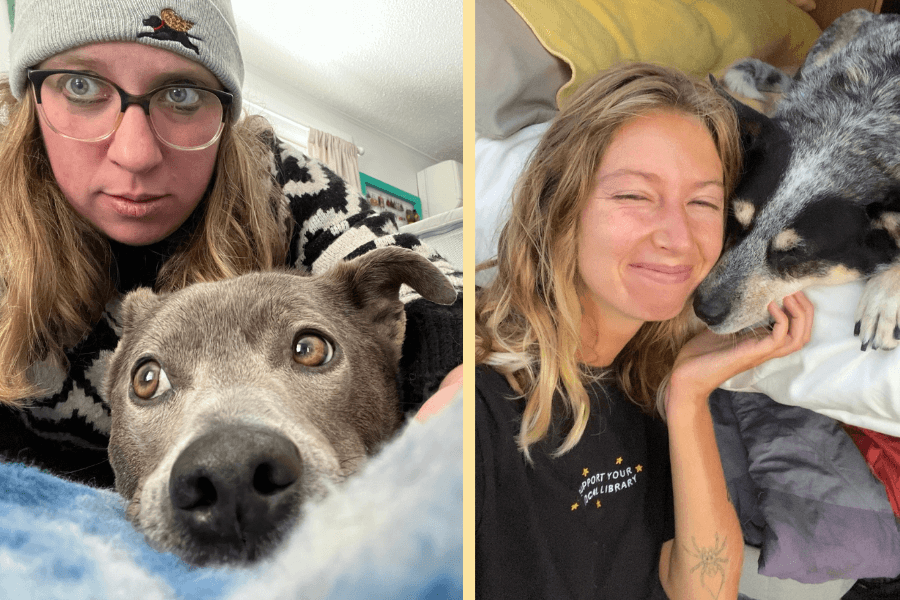

What have your own experiences with anticipatory grief felt like?
I’m so glad you’re asking me about anticipatory grief, because it feels like something we definitely don’t talk enough about! (Though I did just read this lovely opinion piece by Marcela García in the Boston Globe about how her anticipatory grief is the reason why she can’t see The Odyssey, and I sent my own letter to the editor back.)
Probably the two most intense experiences of anticipatory grief I’ve had were with my grandmother, Nunni, and my dog, Seymour.
In summer 2019, Nunni started to experience signs of dementia and Alzheimer’s, which was really hard for me and my whole family. She sometimes thought I was my aunt, who passed away in 2011; other times she would just ask the same questions over and over. I’d never before lost someone like that, where their mind went before their body, and so it was this surreal experience of grieving Nunni before she actually finally died in January 2024.
With Seymour, he’d been fearful and aggressive at the vet since we first adopted him in fall 2020, but that escalated into full-blown vet phobia after he needed to be treated for heartworm in spring 2021. After that treatment, even when he was drugged into oblivion, he still was stressed out at the vet, so his vet and I formed a plan to minimize how much medical care Seymour needed since it was so high stress for him—basically just the required vaccines and bloodwork and that was it. So I always knew he probably wouldn’t live as long as other dogs since he wasn’t one who would ever tolerate full exploratory exams or be up for surgery or chemo or any treatments like that. I began pre-grieving him then, I think, knowing his lifespan would be shorter.
But my anticipatory grief of Seymour really exploded after he bit my newborn son. My baby was only five weeks old at that point, but Seymour’s fearful, reactive, aggressive nature got the worst of him. After that awful incident, we moved Seymour to my parents’ house and my husband and I spent four full months trying every possible thing we could think of—different combos of meds, new training methods, trying to convince child-free friends to adopt him—and all through that period I cried every single day, often multiple times a day, since I was anticipating losing him one way or another.2
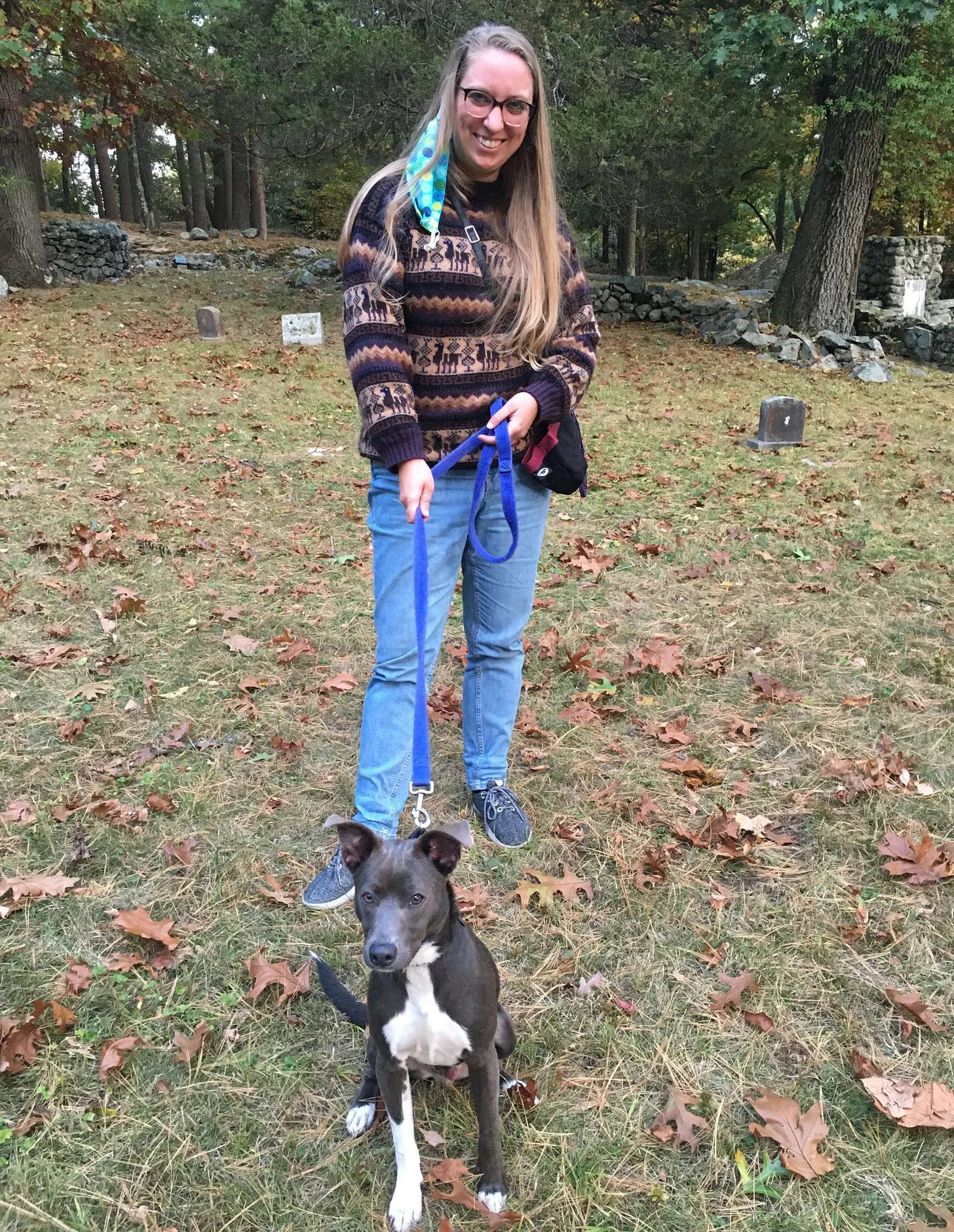
Do you think anticipatory grief makes the when-it-actually-happens grief any different? Do we feel more prepared? Is it just a totally separate thing? (I’m sure it depends on so many things? We already know losing a loved one is such a personal experience, different for us all.)
Sorry that this is a cop-out kind of answer, but I really do think it depends on the situation. When Nunni died, I’d already spent five years grieving her as she slipped farther and farther into dementia, and so her actual death felt more like a relief—I could finally start to focus on other emotions and remember different things about my grandmother and her life.
With Seymour, in the end, he attacked me unprovoked one day in June 2024, and Richie and I decided that euthanasia was the kindest option for him. It was the most painful pet loss I have ever experienced, and his actual death was particularly brutal because of the added layer of guilt that comes with behavioral euthanasia, but at the same time because I had so much time in the months leading up to Seymour’s death working through my anticipatory grief, I felt like I was able to better take care of myself once he finally did die. I knew what I needed to do to help myself mourn—visit Dog Mountain, get a memorial tattoo, write about the experience a lot, make a little shrine of his photos and ashes in our living room. It’s like I went into his death with a plan for how to cope, and while it was still hard and sad—I cried about Seymour every day for six months after we put him down—it felt better to go into the experience prepared.
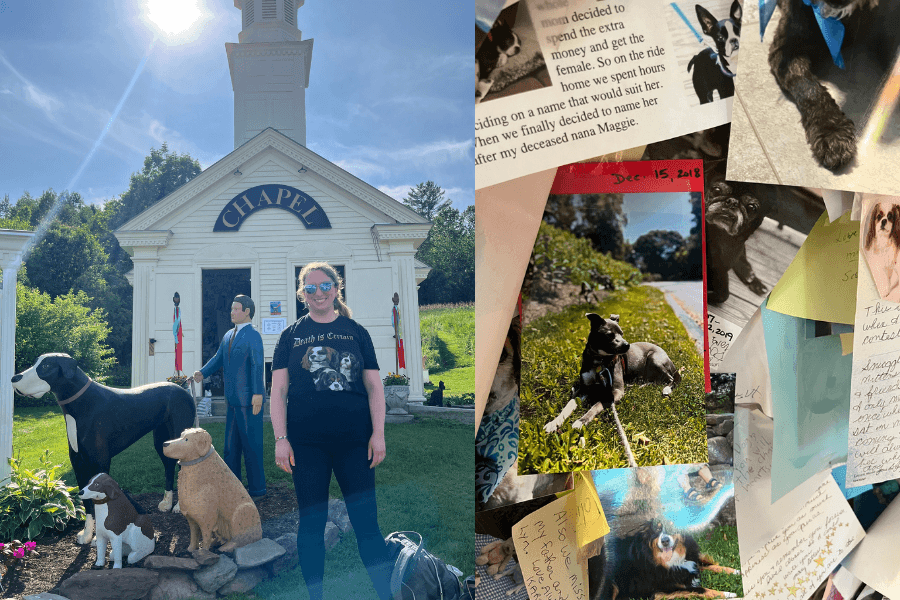
I love what you said about your plan to cope with Seymour’s death—both that it didn’t magically make the experience not terrible and difficult (because how could anything inoculate us, truly, against such a loss?) but also that it helped you care for yourself. In Good Grief, you learn and share so much about mourning rituals. How did you decide what ones felt right for you? Was it instinct, experience, part of a larger framework?
One of the most liberating things I realized about mourning when researching and writing Good Grief was that you don’t have to do the same grief rituals every time, for every animal. It feels so obvious to say this, because clearly you don’t do the same grief rituals for every single person—some people want to be cremated, some want a full Catholic wake, some want a “celebration of life” and not a funeral—but I had felt before like, okay, if I bury my fish in my backyard cemetery, then I have to bury all of my pets in my backyard cemetery, or if I get a pet memorial tattoo for one pet, then I need to get a pet memorial tattoo for every pet I’ve ever had. That is not true. For each animal, instead, I’ve thought about the specific pet and his or her personality and the things we did together and what was special about our relationship, and I’ve tried to find a way to remember them that feels fitting to the specific pet.
So, for Seymour, I knew I wanted to get a tattoo to honor him—I felt a closer bond to him than any other dog I’d had before, and so I wanted to carry his likeness on my arm for always. Having a tattoo of him also makes me happy during funny moments like when I go swimming, because Seymour hated getting wet. So I laugh whenever I’m in the pool or Walden Pond and I look down and see his little tattoo form all soaking wet and I say, “Buddy, you would have hated this!” Also Richie was the one who suggested we go to Dog Mountain to leave a photograph of Seymour in the Dog Chapel there, and this was also such a perfect way to honor him, since we’d taken Seymour there before, and it felt like a special place for our little family—me, Richie, and Seymour, and now it is for our son, too. But did I do those things for my childhood dogs, Gus and Gwen? No I didn’t. And will I do those things for my next dog? I don’t know.
I often think about the “extremes” of anticipatory grief. On the positive side, I believe it can help us remember to cherish the time we currently have. But on the negative end, I sometimes feel it preventing me from being present with Scout. It’s like this knowledge of my dog’s inevitable death simultaneously makes me love her even more but also hangs, wet and heavy, over my head. I feel it when we’re on a sunrise walk, and when I throw her ball, and when we lie down afterward with our bodies touching in the sun. I’m grateful it’s there, sometimes. I’m also devastated.
I totally get this feeling! It’s such a weird, guilty feeling that comes alongside anticipatory grief, like I am wasting time I have with my loved one by pre-grieving them, when I should just enjoy being with them while I can, but it’s impossible not to. Anticipatory grief is a very natural and real human emotion. What I try to do though is to not let that feeling take over my time with my loved one, but rather serve as a reminder to nudge me back into being present. I write in my book about how there is this Bhutanese folk expression that says in order to be a happy person, one must contemplate death five times every day. It seems counterintuitive, but I think that thinking about death so much helps you appreciate the ones you love and the time you do have. In Good Grief I write that, “Perhaps we love our pets so much not despite but because they remind us of death. They’re a daily embodiment of how short life is, how important it is to be present in every moment.” Anticipatory grief is just another way of getting at that idea.
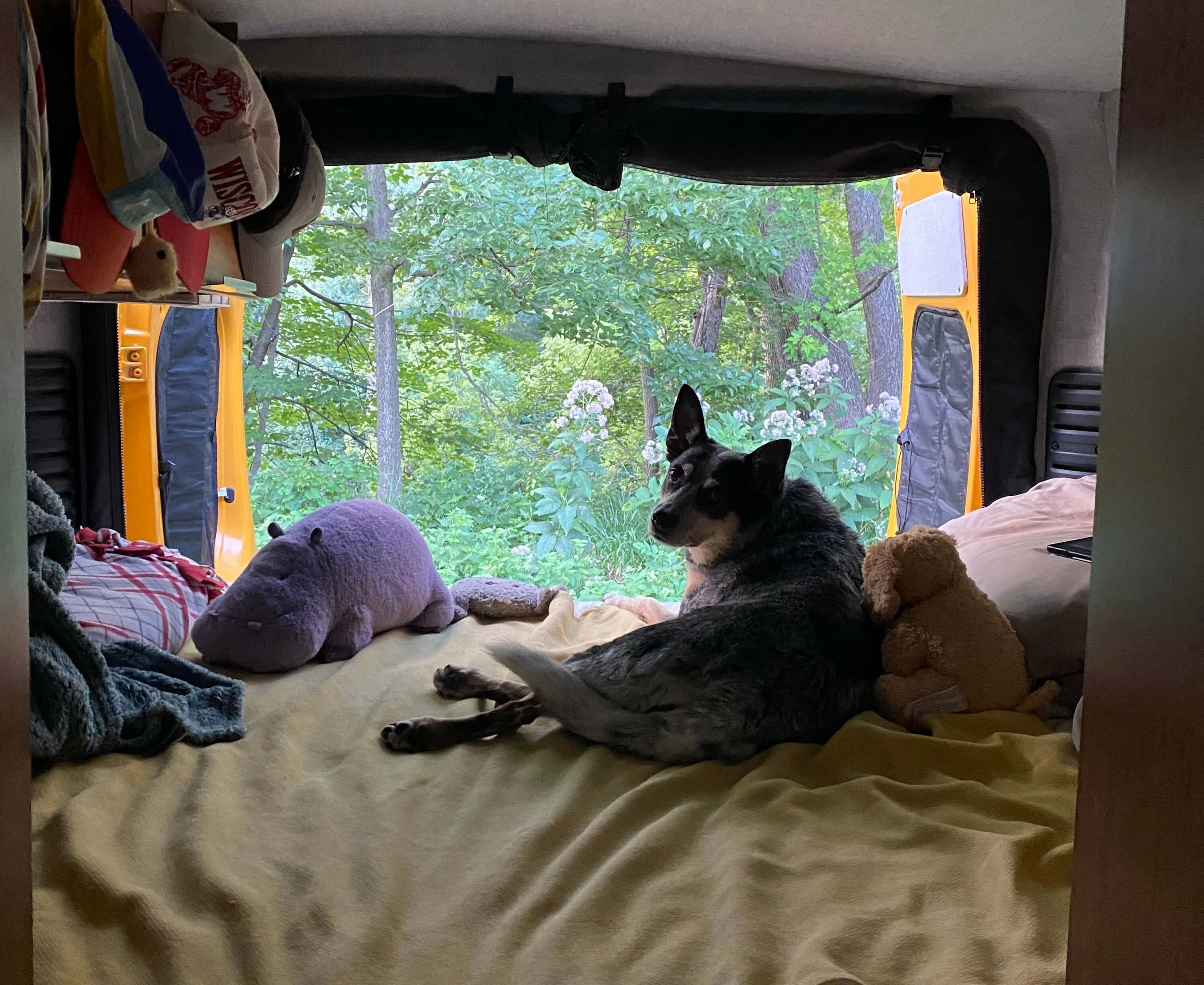
Tell us more about your “death is certain” dog shirt, please!
I would love to! My friend Janna was the one who found the shirt for me, and I love it so much. The contrast of the very alive and alert Cavalier King Charles Spaniels and the heaviness of the message, all in the style of a ’90s hip-hop shirt is funny to me, but I also really appreciate the reminder every time I wear it. We think we can control all these things in our lives, but really, nothing is certain except death. Never forget!!! (And if you want to buy the shirt for yourself, make sure to order it from the original designer Mega64 and not the knock-off version being sold by that monstrous online retailer that I hate!!!)
I know we both appreciate nuance and the honesty of the “it depends” answer (which might sometimes feel like a cop-out but is also, I think, important). That said, are there any overall best practices for grieving? Anything you definitely would or would not recommend?
The thing I always say is: as long as you aren’t hurting yourself or anyone else, mourn in any way you need to. Take as long as you need, and do what you’ve got to do.

“Animal lovers shouldn’t pass up this illuminating and thoroughly charming work,” writes Publisher’s Weekly. I concur!
If you’ve also experienced an impossible behavioral euthanasia decision, please know you’re not alone. People often recommend Losing Lulu (and other similar support groups) for good reason—and the more I’ve talked to fellow pet lovers, the more personal stories I’ve heard. I send so, so, so much love your way.